Thursday, May 12, 2011

Education- are Indian poor really getting help?

Indians have valued education since time immemorial. Today most poor know that education could be the way out of poverty. Government of India clearly brags that it has provided reservation and help for the poor  especially so called lower caste people to enable them to get an education. Indian government also brought out Right to Education law to enable all eligible children to get education as a right not as an optional extra. Although many poor can not afford to educate their children with the exorbitant cost of education, many poor are providing as much education as possible for their children. In a country where disability is not only a curse but a social and religious stigma, some parents even strive to provide education to their disabled children ( refer stories from Deccan Herald below).


However, the so called education system has failed majority of Indians utterly. This is statistically proven when Indian government statistics shows that only 11 percent of children below the age of 15 get any form of education. India has a population of 1.21 billion as per recent census. It is not a mean feat to educate a country with a population where 54% of the population is below the age of 30. Although average fertility rate is decreasing in India  unless urgent measures are taken to address the issue of education India despite its growth rate will not climb out of poverty anytime soon. It is projected that Indian population will increase and reach 1.7 billion by 2050. It is scary to think that Indian population will increase by another 200 million in the next 20 years. This will futher reduce access to education and access to services further.


Where is the hope? Indian government and media have to take urgent steps to enable poor merited students to get proper education. For every poor child that is educated there is an increase in income which helps the family and any siblings. This will help to reduce the poverty cycle at least to some extent. Despite government claims, its policies have clearly failed students shown below. It is high time public took the future of India by its horn and enabled the merited youth and children to get educated and not nip their talent and potential in the bud. Media has a role to play by setting up educational trusts and enable such merited kids to further their education. If Indians want to live peacefully and enable the society to have a harmonious existence all those who can afford to need to contribute to the education of these children and youth. Time for blame is over. It is high time Indians started to act.
Lip service is no longer enough.


Talent born in a mud hut
Mudalagi (Bijapur), May 11, DHNS:

Shivananda Shetty lives in a small mud hut that has no electricity. At night he studies with the help of an oil lamp.

Against all odds: Shivananda Shetty with his mother Chandravva in their home at  Saidapura. DH PhotoHis mother Chandravva uses firewood to cook food on a primitive earthen stove.

The grinding poverty has not proved a constraint to Shivananda who has scored 98 per cent marks in PUC Science stream.

The boy from Saidapura hamlet near Mudalagi in Bijapur district, who got 94.48 per cent in his SSLC, has surpassed himself in PU, scoring 99 in Physics and Maths, and 96 in Chemistry.

Shivananda was an infant when his father Balappa deserted the family, never to return. Mother Chandravva worked as a labourer and brought up her son, who dreams of becoming an engineer and do his IAS. But the boy is in dire need of financial help. Those who wish to help him, can contact his teacher and guide, B H Haliyal on cell no. 9008477705.

PU achievers:
Poverty may topple topper's degree dreams
C K Mahendra, Tumkur, May 11, DHNS

From rural Karnataka, some stories of talent and courage trumping penury

ShilpakShilpakalala has secured the third rank in the arts stream of the II PU exam, but the outlook for her hopes of doing her BA and becoming an IAS officer appears bleak, as her family wants to marry her off.

For her family that scrou­nged for money to finance her PU education, funding further education may be difficult. For Shilpakala, who will need Rs 30 a day to go to degree college in Tumkur, besides the fees, doing BA looks a distant dream.

Early in her life, Shilpakala developed the trick of focusing in class. That helped her absorb all that her teachers had to offer in terms of guidance. She slept for just three hours at night between 1 am and 4 am, studying all the while. Her marks sheet speaks for itself, with a score of above 90 in all subjects and a total of 560 out of 600.

With such enviable scores, she was on course for a repeat performance in her degree, but for the utter poverty back home, where two square meals is a luxury. A student of Basaveshwara Kendriya Samyukta PU College at Kolala in Urdigere hobli in Koratagere taluk, Shilpakala’s parents were bonded labourers even as recently as five years ago.

Their meagre earnings as coolies sustain the family. The girl used to go on an empty stomach to college, six km from home. Her first meal of the day would be only after returning home in the afternoon.

Shilpakala secured 86 per cent in her SSLC and wanted to join the science stream in PUC. But she had to be content joining the arts stream in the college, because she got free admission with a promise to subsidise her education. Shilpakala’s economics teacher, S Rajanna, helped the girl a great deal.

Shilpakala says it will be difficult for her family to send her to college, as they were already supporting her brother’s course at an industrial training institute. For them, marrying her off is a better option as that would mean one mouth less to feed. It was, therefore, no surprise when the news of her stellar performance in class XII spurred her parents to draw up Shilpakala’s marriage plans, instead of asking her to buy the application form for the BA course.

They are already working on a couple of alliance proposals. If no one comes forward to sponsor her education before the proposals fructify, Shil­pakala will have to start preparing for the wedding and her career dreams will turn to dust.

Those who wish to help Shilpakala realise her dreams call: 8861441186.

Indigent, intelligent, they dream big
Bidar, May 11, DHNS:

Free board and lodge provided by their college helped Sharanappa and Mushtaq

Sharanappa Saibanna Pujar of Gurusanagi in Yadgir District, son of a cement factory worker, dares to dream despite the poverty of his family.

He has scored 85.83 per cent marks in the second PU Science examination and has made his parents proud. He has bagged 93 marks in Physics, 93 in Chemistry, 94 in Mathematics, 85 in Biology, 60 in English and 90 in Kannada.

The eldest among the three sons of Saibanna Pujar, a fireman at the Rajashree cement factory in Sedam taluk of Gulbarga district, Sharanappa hopes to become an engineer.

Saibanna Pujar manages his family on a modest salary of Rs 5,500 and has ensured that his children are educated.

Shaheen Pre-University College in Bidar, where Sharanappa studied, provided him free board and lodge.

His father is happy that his son has passed with flying colours. But he is concerned over his son’s future.

“I cannot afford to continue his studies. If only the Government or philanthropists give wings to his dreams....” he adds.
She never let herself ‘Down’
Udupi, May 11, DHNS:

Malavika Somayaji has proved that disability can never cripple the urge to make it big.

Malavika with writer VaidehiMalavika, who suffers from Down’s Syndrome, has successfully passed the II PU exams with a percentage of 45.

Her elder sister Madhura told Deccan Herald that Malavika studied at B M School in Parkala from class I to X. Malavika wrote her II PU exam as an external candidate. Madhura said Malavika’s future plans were yet to be decided. “We all are happy and Malavika is happier,” Madhura said.

Saturday, April 30, 2011

Endosulfan debate in India- Whose life is it anyway?

Endosulfan is a pesticide and it is an organochlorine which is known to persist in the environment causing damage to aquatic systems and is known to bioaccumulate and travel long distances. Australian chemical regulatory body APVMA has cancelled its registration since Oct 2010. (1).

In India it has been used frequently and indiscriminately as if it is a harmless chemical. Indian government claims to defend its usage as if there are no other alternatives available. This is the defense it has been using for quite considerable number of years. This argument is used to ensure agriculture productivity is maintained (even though it hovers around 2% so no great productivity). However in agriculture areas where is it used frequently it has alleged to have caused severe deformities in new born babies to cancer among adults. However the government either state or central governments have not made much effort to prove this scientifically. States such as Kerala and more recently Karnataka have banned the use of this chemicals. In Geneva recent convention has led to a decision to ban this although India won some exemptions. However this still does not solve the issue as to what caused these deformities and cancers. Is it truly Endosulfan or some other cause? Although Endosulfan is known for its environmental hazardous nature without proper scientific proof Indian governments do not have a scientific leg to stand on.

Another key factor to note in the use of Pesticides in India is the sheer lack of comprehensive Material Safety Data Sheets (MSDS) or Proper Lables. In the western countries the MSDS is comprehensive with Minimum/maximum residual limits and minimum withholding periods. Apart from these farmers and horticultural staff are trained in the safe use of these chemical and use of Personal Protection Equipment (PPE) under the Occupational Health and Safety Act (OH&S). In India, I have yet to come across these legislations for agriculture. In India pesticides herbicides and insecticides are used indiscriminately without the proper use of PPEs. This leads to the question was it Endosulfan or some other chemical which is still not banned in India yet farmers use it indiscriminately without PPE and expose themselves, their families and general public who buy these vegetables, fruits and other food products not knowing how much of pesticide residue is still remaining. Washing need not remove all the chemicals from food products. 

This leads a serous question Indian agricultural productivity at what cost? to the farmers and general public. Is Indian government interested in just feeding the public to shut them up or is it interested in public health? Do farmers children and families have to pay the price for feeding Indian population?. Already over 150,000 farmers have committed suicides in India due to various reasons how many more need to be scarified? Are the public so complacent or ignorant or blaze' about these issues that they don't care? Every time public consume these chemicals even in micrograms if they bioaccumulate there is a chance that they can cause health problems. In a country like India where governments and private organizations are not interested in conducting research on these issues, it may never be known what is the price the population is paying for so called productivity and growth.

The answer for general public is to wash all vegetables with water thoroughly as much as you can to reduce the chemical intake. If possible grow as many vegetables as possible. To their credit both Kerala and Karnataka governments have banned the Endosulfan use. They can go a step forward and train the farmers in safe use of chemicals. Even if they spend 10% of the money they spend on unnecessary fertilizer subsidies on training the farmers in safe use of agrochemicals many health problems can be reduced. This is a serious environmental and public health issue which government needs to address immediately. India may have agricultural sector growth but could pay a very heavy price in the longer term in the health sector and overall productivity.

It is high time Indian public paid attention to these matters and demanded better policies from their governments.

References

1. http://www.apvma.gov.au/news_media/chemicals/endosulfan.php
2. http://www.bayergroupindia.com/thiodan.html
3. http://www.bayercropscience.com.au/resources/products/msds/Thiodan_MSDS_16_0507.pdf


(2). This is the Product information for Thiodan ( Endosulfan) in India.

Active Ingredient:
   Endosulfan
 
a Product Category:
   Foliar Insecticide
 
a Mode of Action:
   Contact & stomach insecticide.
 
a Crops:
   All pulses, vegetables, fruits, rice, cotton, tea, soybean
  
a Year of Registration In India:
   1968
 
a Disease Spectrum/ Weed Spectrum (for Herbicides):
   All pests belonging to Lepidoptera, Homoptera, Coleoptera , Diptera, Thysanptera
 
a Formulation Categories:
   EC - Emulsifiable Concentrate
 
a Cropwise Dosages:
   1 - 1.25 lt/ha
 
a Product Features and Benefits:
   Contact & Stomach poison. An ideal partner in IPM/HRM
 
a Antidote:
   1. Gastric lavage with a mixture of activated charcoal-2 parts, magnesium oxide - 1 part, and tannic acid - 1part in 300 ml warm water
...2. Saline pugative may be given but oil laxative should not be given
...3. To induce sedation and control convulsions phenobarbitone (upto 0.7 g per day) or phenobarbitone (0.25 to 0.5 g per day) may be given
...4. 10% Calcium gluconate may be given intravenously to control spasms. Epinephrine is contraindicated.
 
a Precautions:
   Handle with care, Poisonous, Do not touch or Inhale the contents.
 
a Toxicity Indication:
   Poison
   Highly Toxic.

The question is why was this product allowed to be

sprayed as an aerial spray despite company labels asks

people not to touch it?


Endosulfan poisoning
Ronald Anil Fernandes Deccan Herald 1-05-2011

The fight is not over yet for victims of the pesticide who need to be compensated

 All three children of this family in Alankar village near Mangalore are lifetime victims of endosulfan. Photos by AuthorTwenty-six-year-old Vidya and her twin brothers Diwakar and Dinesh, 24, of Alankar village on Uppinangady–Subramanya road in Dakshina Kannada district, about 75 km from Mangalore, would have been gainfully employed  or perhaps happily married, had they been like others their age. Instead, they are  confined to the four walls of their house since birth.

Their mother Rajeevi has to fend for them — right from feeding them to their other daily needs. Their future is uncertain. Sadanand, a postman and an activist, attributes their plight to probable use of water or eating fish from the rivulet nearby where trucks carrying endosulfan pesticide were washed many years ago.

Sheelavathi, 43, resident of Aethadka, about 30 km from Kasargod, can speak and think like any woman. But she is  completely paralysed below the neck for the last 30-odd years. She explains her misery: “I was in Class II when  a helicopter passed overhead spraying something (endosulfan), which doused me also. As soon as I reached home, I collapsed. That was the last day I walked. My parents took me to different doctors in vain. My father passed away leaving my mother to take care of me. My only brother too died in an accident sometime ago.”

Her mother Devaki would lock her up in the house and go to work. Of late, Devaki (over 70 years) has not been working. She waits for their relative Shankari to bathe Sheelavathi, who is barely three feet.

These are but two examples from two coastal districts of Dakshina Kannada (Karnataka) and Kasargod (Kerala) out of thousands of victims of endosulfan, a pesticide used by the Plantation Corporation of Kerala (PCK) since 1978. The purpose was simple: To get high yield from cashew plantations spread over thousands of acres of fertile land across both districts. The result: Thousands of victims suffering from various illnesses, including cancer, asthma, mental retardation, allergy, early onset of menstruation or delayed sexual maturity and impotency among others.

Doctor reveals horror…

The horror tales came to light when Dr Mohan Kumar, a medical practitioner at Swarga in Kasargod district, wrote an article in Kerala Medical Journal about the unusual increase in human and cattle suffering way back in 1996 and subsequently in ‘Down to Earth’ in 2000, establishing a link between spraying of endosulfan and human suffering. “Almost all children born during the ‘endosulfan period’ are suffering from one or other disability, he said. At the same time, a group of post graduate students led by Dr Ravindranath Shanbhag (then professor of Pharmacology in KMC, Manipal) conducted a study and brought 103 patients (out of 400 identified by Dr Mohan Kumar) to Manipal and tested them. To their surprise, the types of diseases matched with scientific literature,  establishing the vital link. Out of them, 23 were mentally retarded, 20 suffered from epilepsy, 43 from mental illness. It is then that  Kerala agriculture minister Krishnan K sought to know why endosulfan affected only Kerala when it was being sprayed in border areas of Karnataka too. “We rushed to areas mentioned by the minister - Kokkada, Patrame and surrounding region - and enquired with residents. A thorough investigation revealed that there were many people with similar deformities, which had not been noticed before,” Dr Shanbhag recalls.

While Kerala government has identified 4,273 victims (including 525 bed-ridden), Karnataka government is yet to identify all victims. While three villages have been surveyed, 27 other villages are yet to be covered.

Social  activists put the figure at several thousand victims in both the districts. Dr Shanbhag says that he has collected details about 6,500 children suffering from various diseases in the affected parts of Dakshina Kannada district alone.

K Shankar, a resident of Kajampady in Kasargod district and former employee of Cashew Project of Kasargod (later Plantation Corporation of Kerala),  alleges that real victims have not been  compensated while those with prior deformities had falsely claimed compensation.

Janaki (52), Pammu (65), Bhagya (65), Madaru (70), Chimploo (68), Aithappa (60) and Ammanni (50) are just a few to name. All of them have worked for PCK and have been victims for the last several years. But till date, they have not received any compensation, alleged Shankar.

Gene analysis must

Dr Shanbhag insists that every boy/girl of marriageable age from the affected areas must undergo gene analysis to prevent defective children being born.

There are at least 1,800 pregnant women in the sprayed areas of Dakshina Kannada district alone, most of whom never go for scanning (from which physical deformities can be identified) before delivery. “The government has to arrange for their scanning,” he asserts.

Sridhar Gowda, who lost his eyesight but is a ray of hope to many victims in Kokkada and Patrame, says the victims are poor and the government must provide compensation as well as monthly pension to meet their medical expenses.

Notwithstanding the global ban on endosulphan, until the government takes firm measures to eliminate harmful pesticides in the market under different names, the numbers of these victims, just a few thousands now, is bound to grow.

When a government enterprise itself sells the dreaded pesticide worth crores of rupees, how effective will a ban be is the million dollar question.
Go to Top


Karnataka to re-impose ban on endosulfan
Belgaum (Karnataka), April 30 (IANS)

Karnataka Chief Minister B.S. Yeddyurappa on Saturday said the government will re-impose within two days the ban on use of pesticide Endosulfan in the state.

"We will promulgate an ordinance within two days to ban endosulfan's use in the state as it is harmful to health of the people," Yeddyurappa told reporters in this north Karnataka town, about 500 kms from Bangalore.

Karnataka had Feb 17 banned Endosulfan use for 60 days. The state has been demanding a nation-wide ban.

Endosulfan has been extensively used in Dakshina Kannada, Uttara Kannada and Udupi districts on the west coast to protect cashew crop from diseases.

While imposing the 60-day ban Feb 17, the Karnataka cabinet had said that aerial spraying of the insecticide had resulted in various health problems such as children suffering physical deformities and mental retardation, skin cancer and epilepsy.


Decision is victory of people against pesticide lobby, says Achuthanandan
Geneva meet bans endosulfan
R Gopakumar,THIRUVANANTHAPURAM , April 30, DHNS:

The ongoing sixth conference of parties to the Stockholm Convention on Persistent Pollutants in Geneva has accepted a global ban on the pesticide endosulfan whose continuous use is believed to have caused serious health problems in parts of Kerala and Karnataka.

The conference took the decision based on the risk profile and risk management for endosulfan done by the Persistent Organic Pollutant Review Committee.

The ban, which will cover technical endosulfan, its related isomers and endosulfan sulphate, is expected to take over five years to show some effect. The Union Cabinet will have to ratify the decision if the ban has to take effect in the country.

According to C Jayakumar, environmentalist and an independent observer  attending the meet, though the conference approved the ban which was recommended, India was also allowed sufficient exemptions that it demanded.

This means that endosulfan can still be used against specified pests in cotton, jute, coffee, tea, tobacco, cowpeas, beans, tomato, okra, eggplant, onion, potato, chillies, apple, mango, gram, arhar, maize, rice, wheat, groundnut and mustard till alternatives are found.

There is no other cheaper and effective broad spectrum pesticide available to Indian farmers as of now.

CM breaks news
Incidentally, the “breaking news’’ in Kerala came from the office of Chief Minister V S Achuthanandan who has been in the vanguard of the “ban endosulfan movement” raging in the state for the past several months. In the last few weeks, the state had witnessed a mass campaign for a national ban on the pesticide spearheaded by none other than the state’s 87-year-old chief minister.

Achuthanandan had even sat on a day’s hunger strike here three days ago with this demand. Understandably, the state which observed a shutdown on Friday on a call by the ruling LDF received the news of the global ban with a sense of fulfilment.
“The decision in Geneva is the victory of the people against the pesticide lobby. It was our unflinching resistance that forced the Centre to change its pro-endosulfan stand at the last minute, leading to the ban,’’ he said.

Endosulfan is believed to have been the single reason for the unusually large number of babies born with physical deformities and neurological disorders in parts of Kasargod in the last 20 years.

Investigations pointed out that the aerial spraying of endosulfan for 20 years since 1970 in the cashew plantations owned by the state-owned Plantation Corporation of Kerala may have resulted in the disorders.

Some Karnataka villages adjoining Kasargod have also reported health disorders. Though Kerala had banned the use of the pesticide in 2005 it was not effectively implemented. Karnataka had banned the pesticide recently.

Sunday, March 20, 2011

Amidst the thorns of corruption some fragrant roses bloom!!


Governments of India have set up numerous schemes to so called help the rural sector especially the "aam admi" (are these mango people? as aam = mango) or the common man and farmers. However, without going into politics of it all I can say proof of the pudding is in the eating. Statistics supplied by the government itself shows that over 800 million people in India are living with an income of $2 per day. That does not speak much about the efforts made by the governments of all persuasions to help the farmers and the common man. Most of the schemes are mismanaged, corrupt and downright managed by apathetic corrupt "babus" who specialize in sheer incompetence and ignorance. 

Amongst such arrogant management here are stories of people taking matters into their own hands and not just surviving but thriving and utilizing the money effectively and efficiently. People of India are not in need of pity charity or condescending attitudes or patronizing politicians giving their "subjects" hand outs. They need a hand up. Once they are able to get the help they need they are capable of creating jobs and as late Prof. C. K. Prahalad said create "Fortune at the bottom of the Pyramid". Over 85% of the Indians do not have access to any banking services so how do they know how to gain financial literacy or how to conduct their financial affairs. In Kenya with the start of banking system such as M-Pesa poor people have got access to financial services through mobile phones. In Africa over 500 million people now use the services. In India governments and RBI should start looking at removing archaic banking regulations and move into 21st century to enable banking services. It is not that hard to implement the systems are there now and security issues have been already addressed. But in India as in every other case wheel needs to be reinvented as if Indians are the only ones who know how to do things securely and safely and rest of the world is not interested in safety and security of their governments or people. 

Google is developing android based financial services which will allow people to pay through the phone for milk newspaper etc. Banks already have paypass where one can pay for small amounts through waiving of credit card in front of a reader. Use of QRcodes ( Quick Response Codes) will allow secure interaction of various links. India should stop reinventing the wheel and learn to use the wheel to make a car or ride in one. Time for procrastination and apathy is over. World events have shown that people are fed up with old archaic dynastic incompetent systems and want to move on with a new world using information technology. World is demanding true equal opportunity for all. No one in their right mind wants free trade but want fair trade. The people below are the best example of given half a chance people can turn their life around without education in a traditional sense. 

I have put these articles in my blog to celebrate the achievements of people who turn their life around without joining the Victims club or Hand-wringer's club and said look at poor poor me and have taken meager resources and have achieved something for themselves and the community. India needs more people of this nature. I thank Deccan Herald for publishing these inspiring articles.


MGNREGS funds utilised for afforestation in Asundi in Gadag
This GP has a green thumb
R Virendra Prasad, Gadag, March 19, DHNS:

The Asundi gram panchayat has set an example through its afforestation initiative taken up under the MGNREGS.

At a time when MGNREGS is associated with misuse of funds and irregularities, the Asundi gram panchayat has utilised its funds for growing saplings which will be planted around the village as soon as the rains begin in June.

The gram panchayat has set aside Rs five lakh of the MGNREGS grant for the purpose. More than 55,000 saplings are being grown at the Government school premises in the village, of which about 50,000 saplings are teak and the remaining are banyan, pongamia and neem. The forest department is supporting the gram panchayat in its endeavour.

Trees on both sides of road
Two women from the school have been watering and taking care of the saplings for the past two and a half months.

Two villages –– Asundi and Mallasamudra –– come under this gram panchayat and the plan is to plant the saplings on both sides of the road, areas identified as parks in layouts and on one side of agricultural fields.

The gram panchayat has already begun digging pits for planting the saplings.

‘Poor work’

Elaborating on the initiative, gram panchayat member Somareddy Ramenahalli said: “Every year 20 per cent of the MGNREGS funds allotted to the gram panchayat is given to the forest department. But the department not only plants saplings haphazardly, but does not take care of them. So we decided to set up a nursery ourselves with the funds.”

After gram panchayat president M M Hosamani, vice president Shakuntala Mulagunda and members gave their go ahead, the idea was put to action, Somareddy added.


Entrepreneural success
Her determination reaped benefits
Manish, Mysore, March 19, DHNS:

''If your determination is fixed, I do not counsel you to despair. Few things are impossible to diligence and skill. Great works are performed not by strength, but perseverance,'' observed 18th century lexicographer Samuel Johnson.

The story of Padma Satish, a resident of Neralekere, Srirangapatna Taluk, Mandya District, is a perfect example of how perseverance pays rich dividends. Padma was one of the participants to receive a smart card and zero balance account offered by Canara Bank, here on Saturday. Hailing from a rural background, Padma, who once used to tend to livestock and work in her four acre farm in order to make ends meet, now employs around 20 women in her village to prepare a wide range of homemade products.

Her array of products include snacks made out of ragi including biscuits, papads and pakoda. She is also responsible for manufacturing edibles such as jamun mix, puliyogare mix, badam malt and inedibles such as candles, soap oil, phenyl and a range of other products that has takers in the neigbhouring villages.

Recalling her growth through the last four years, Padma said earlier by cultivating only paddy and groundnuts, she used to earn only ` 25,000 per year. However, undergoing training at the Zilla Krishi Kendra changed her life, she added. She mentions that selling products made out of ragi itself fetches her anywhere between ` 40,000 and `  45,000 per annum.

When she headed to take part in the training programmes, Padma recollects the opposition she had to face within the family. However, with a firm goal of succeeding, she started selling products in the village. Over a period of time, Padma’s products became widely popular in the neigbhouring villages too.

Having passed only SSLC, Padma takes hour long class for B Sc students who visit Ragi Research Centre at VC farm, in Mandya.

Also understanding the importance of education, Padma mentioned that she had worked hard to ensure that her three children pursue their studies. She mentions with pride that her eldest daughter is studying engineering at GSSS Institute of Engineering and Technology for Women in Mysore.

Financial Inclusion 

Canara Bank Circle Office, Mysore, had organised a programme on Financial Inclusion and loan linkage for Self Help Groups and other weaker sections of the society. Participants also zero balance accounts on the occasion.

Around 1,200 smart cards were distributed to SHG members of 22 villages under the Mysore Circle Office, under the programme. Executive Director Jagadish Pai inaugurated the programme. General Manager N Ramesh, Deputy General Manager Subramanya Iyer and others were present at the programme.

Thursday, February 24, 2011

Agriculture Budget-Right Noises but will it be implemented.

The agriculture budget in Karnataka was released. It makes many right noises. However it still does not move in the right manner when it comes to Research and Development in agriculture and there does not seem to be any room for biotechnology or education of farmers in best management practices or new technology. Farming sector needs to move into 21st century. This is something Indian governments of all persuasions seem to forget as they are chasing the farm votes not necessarily thinking truly of modernizing agriculture. However there are some right decisions here such as drip irrigations, better pump sets, education stipends and loans for education of farmers children, exemption of VAT for floriculture and veterinarian colleges set up in rural areas. Non development of rural areas is not an option India can afford in the 21st century. This budget has failed miserably in specifically providing for construction of silos and chillers for storage. Prevention of wastage is as important as production. Hopefully world agriculture investment summit will open doors for infrastructure investment. But this is small steps in the right direction. Only thing is will it be implemented?


*Karnataka agricultural development policy to be strengthened 
*World agriculture investment summit in June 2011
* New courses for diploma in agriculture
*Stipend for agricultural students
*Rs 2 lakh insurance for farmers
*Training to be given to five lakh farmers in organic farmers
* Rs 289 crore sanctioned to improve Krishna project
*Rs 17,850 crore allocation for the agricultural sector
*Rs 125 crore for Bio Farming and Rs 100 crore for drip irrigation
*Rs 1000 crore earmarked for 'Suvarna Bhoomi' project
*Rs 3900 crore for supply of electricity to IP sets
*Better IP sets to be provided to farmers to reduce power consumption
*RS 2123 crore for uninterrupted power supply to farmers
*Rs 1000 crore for renovation of ponds and lakes
*Desilting and rejuvenation of 23,000 lakes
*Intrest free loans for higher education for farmer's children
*Agriculture revolving funds to be increased to Rs 1000 crore
*Rs 100 crore for small ports
*Rs 200 crore for organic farming
*State biofuel board has been set up
*Seeds to be supplied to farmers at 50 percent subsidy
*Rs 9 crore to encourage paddy and sugarcane production
*Single window scheme to help farmers
*Rs 25 crore for coconut cultivation
*More neera processing units to be set up
*Exemption of VAT for floriculture
*Rs 2 crore to combat diseases that afflict areca plantation
*Rs 10 crore for APMCs across the state
*Veterinarian Colleges to be set in Gadag and Athini
*Mega dairy at Mysore, KMF will mobilise funds for this
*Rs 2.5 crore for prevention of epidemics
*Rs 10 crore as incentives for fish farming
*Construction of 50 new fish markets at Rs 5 crore
*2000 houses at Rs 60,000 each for fishermen
*Software programme to be developed for documentation of land records


Abovementioned list is as per Deccan Herald 24-02-2011

Tuesday, February 22, 2011

Farmers who innovate thrive not just survive - Deccan Herald Article


This an article published in Deccan Herald in 22 Feb 2010. It is an inspiring article. I hope this helps people to understand that even farmers can be tremendous leaders. Please see the statement made by Mrs. Susheelamma as to how they treat their labourers. If only our so called high and mighty bosses learnt this philosophy. I wish I could visit these people. However if you are interested in agriculture and want to visit Tumkur it would be a good opportunity. Diversity is the key to successful small farms and understanding markets not just following subsidies government provides is the answer to stable profits. Financial literacy is the key to successful gross profit margins. This man is truely an inspiration along with his wife.

Please note that I have put this article in my blog so that people get inspired and I have no other intention.


INNOVATIVE FARMING
Reaping a rich harvest


Tumkur farmer Sadashivaiah has made agriculture profitable by way of appropriate planning, labour management and a good marketing strategy. Farmers from different districts are inspired by this 75-year-old’s approach to agriculture, writes Anitha Pailoor

“He is good at marketing,” Susheelamma says, smiling at her husband. Sadashivaiah agrees with her wholeheartedly and adds, “I have inherited the skill. Irrespective of whether it is flowers or vegetables, I have never returned home with unsold produce. That has added to my success in agriculture.” The couple lives in Maragondanahalli village 12 kilometres from Tiptur in Tumkur district.


The Kannada translation of ‘One straw revolution’ by Masanobu Fukuoka changed 75-year-old Sadashivaiah’s outlook towards chemical-based fertilisers and he shifted to a non-chemical-based method of irrigation. He has been practising organic farming since 1991. Over the years, he has experimented with his land and crops and has evolved strategies to make agriculture sustainable. He has twelve acres of irrigated land, spread across four different patches. A seven-acre dry patch where finger millet, jowar, oil seeds, chilli, pulses, drumstick and other vegetables are grown meets the food needs of the family. Susheelamma claims that the family has to buy only four items: rice, jaggery, salt and kerosene for their kitchen. One block of the irrigated land spread over two and a half acres consists of five varieties of areca, four varieties of banana, pepper, turmeric, ginger and coconut. Cocoa, cardamom and coffee are other crops which he has successfully tried on the farm. “I ensured that there was a stable market before opting for the new crops,” says Sadashivaiah.


He spends most of his time in the farm, overseeing agricultural activities and sometimes, working along with agricultural labourers. In the morning, the day’s work is charted out and discussed. Sadashivaiah observes that once they understand the purpose and importance of a certain task, implementation becomes easy. Sadashivaiah’s family shares fruits and vegetables with labourers’ families, as they do with the relatives. “Taking them into confidence and treating them with dignity is important. For us they are our extended family. Our children are away in Tumkur and Bangalore, progressing in their profession. They have great love for the farm. We draw our strength from their immense support,” says Susheelamma.


A wide range of crops
Sadashivaiah is also popular among farmers for his passion for varieties. A range of betel varieties grown on an elevated platform in the middle of the farm showcases his creativity. Seven varieties of lemon are the highlight of his fruit farm. Another block has varieties of mango, sapota, guava and lemon plants interspered with coconut trees. A variety of jasmine, kakada, grown on 20 guntes, fetches a daily income for eight months in a year, starting from August. Lemon and vegetables are short-term crops while the others bring in the annual income. Sadashivaiah believes farming is rewarding. He again divides his income into four expenditure heads. This includes: agriculture, domestic needs, savings and other expenses like labour charges, organising agriculture related programmes and helping others.


The farm is designed in such a way that every plant draws maximum natural nutrients. Sadashivaiah says that 25 per cent of the nutrients should come naturally through nitrogen fixing, sunlight, monsoon and wind. Each plant should get 50 per cent of the nutrients from its biomass. So the bio-waste of the farm is utilised insitu. External inputs like vermicompost, cow manure and manual labour should amount to the remaining 25 per cent.


Sadashivaiah strongly feels that at least ten guntes of forest species should be grown per acre. That provides proper raw material for composting and ensures supportive biodiversity. A vermicoposting unit is maintained on the farm. Currently Sadashivaiah is trying to enhance the nutrition value of vermicompost.


Colourful crotons and flowering plants in the farm create an environment that soothes your senses, and also act as moisture indicators. When the sensitive crotons turn dull, he waters that particular region for three hours through drip irrigation. Four borewells irrigate the twelve-acre area.

Role model for other farmers

The farm is encircled by a live fence comprising teak, gooseberry plants in the southern direction, hebbevu (Melia composita) and silver oak in the north, mango, jackfruit and pongamia towards the east and tamarind and wild mango towards the west. The plants are chosen to gain maximum advantage from nature.


Farmers from different regions and districts are inspired by Sadashivaiah’s approach. He says that at least 40 farmers in Tumkur district have changed their cultivation methods after visiting his farm. Komala, a weekend farmer says, “His guidance  is very useful for first-timers like us. Every time I visit this farm I get more ideas and also bagful of plants.” Sadashivaiah maintains a nursery of plants which fetches him a small income.


Susheelamma used to work alongside Sadashivaiah till visitors started flocking to their farm. Sadashivaiah is an active member of organic farmer movements in Karnataka. Their farm has hosted several farmers’ meets and helps in passing on key lessons about sustainable farm life.  

Sunday, February 20, 2011

Food Security and Agriculture Budget in Karnataka

Today a study by Ficci-Yes Bank  published in Deccan Herald has indicated that Karnataka offers the best investment option for food sector in India. Karnataka government is also on the brink of providing to the people its own Agriculture Budget separately from the state general budget. This has some huge implications if handled properly. The government of Karnataka may be providing a budget as a vote catcher however it is providing certain market signals inadvertently.


In India, budget is provided each year as a general budget by the finance minister and the railway budget by the railway minister. Railway budget was conducted separately for several reasons and it is the relic of the British Raj where the budget was presented since 1924 as it was almost a third of the national budget. The British started the railways in India not for the people of India but for the transport of its army. It was hugely important for the British Raj to have an efficient network of railways to transport its army in the quickest possible time to quell any ruler who disobeyed its authority. The British also cunningly separated the railway budget so that they could fund it as an army expenditure rather than as a civil expenditure although they did not mention it as such. There are documents to show that the British spent on whole of India as much as they spent on the City of Manchester. Indeed their own army officers and accountants wrote several documented letters to the Queen Victoria's government complaining  about the lack of money in the civil budget.

Railways gained importance later as it became the sole national transport neural network of India. Today it has over 63,000 km of network with 18 million passengers (that is 0.001% of the population) and 2 million tonnes in freight yet has its own budget.  Agriculture, sustains not just the middle class to above middle class income populations but also 13.5% of the Below Poverty Line (BPL) population. India is spending over INR~15,000 crore annually however has no separate national agriculture budget. This situation becomes even more significant when one considers that off a labor force of 478 million people, over 52% of the Indian population is employed within the agriculture sector while industrial and services sectors employ 14% and 34% of population receptively (as per information provided by CIA-World fact Book 2011). However, GDP wise agriculture accounts for only 16.1% of GDP while industry and services sectors account for 28.6% and 55.3% respectively.  These figures clearly show that however much one wants to project India as the Silicon Valley of the Southern Hemisphere or as "future Global super power" etc., it is still an agrarian country in need of serious investment in all sectors of Agriculture to ensure food security and continued initiatives in rural poverty alleviation. Hence a separate agriculture budget by the Karnataka government is highly significant in various ways.

Agriculture Budgets and Markets

If the Karnataka budget is presented not just as a farmer friendly one offering all manner of subsidies but as a investor friendly budget it would have a significant impact on the market signal that the government would be providing for investments in food sector. Karnataka needs investments not just in rail and port networks but also to increase its domestic consumption and more importantly the production. If farmers are provided with incentives to use water at night and not during the day it could have a serious impact on both water and energy consumptions. This model has been successfully used in Gujarat currently. If Karnataka government allows farmers and private companies to build silos, chillers and other storage systems on-farm and near railway tracks it would have huge impact on food security by allowing farmers to store grains and produce on-farm when the market prices are poor and sell it when prices are good. This would increase their profitability which in turn would have significant impact on migration of rural youth, employment and other socio-educational benefits. The market would determine the price for over 85% of the population and competition would drive the prices and stabilise the price structure rather than at the whim and fancy of the government. The central government of India has already signalled that it would remove octroi, mandi taxes and other archaic taxes.

The government need not provide much financial investment but needs to provide right market signal for agriculture investments which is languishing in a policy black-hole and a bureaucratic quagmire sinking farmers daily in a debt and despair ridden environment. But the fact that this step is taken by the Karnataka government is in itself will be seen by the markets as a signal where importance is being finally given to food and agriculture. At the least it will be seen as a stepping stone for correct food policy development to cater for whole population food needs rather than conduct crisis management and render food as a social welfare and election currency. 

To wring ones hand constantly and blame the large population as the problem is a cowardly lazy cop out. Today India need not languish in the food inflation and poverty as it has reasonably good production despite crop failures due to drought and floods, has a reasonable foreign exchequer nearing $USD 300 billion (China has 3 trillion) to purchase food if necessary. What is truly lacking is the will to allow private sector to run the food economy while government providing the necessary support through policy and governance infrastructures. It is well known now through studies that alleviation of poverty and income generation opportunities will usually reduce population there by cost to the government treasury for welfare programs. Kerala government has shown this through various policy initiatives. India is called as a "reluctant urbanizer" due to the fact that unlike China India has not made any concerted effort to modernize its bigger towns and regional areas leave alone villages.

Karnataka has over 71% of its population living in rural areas and depending on rural income. It is glamorous to chase the mighty dollar for IT and BT sector however, that does not mean to say it should be at the cost of agriculture or industry sectors. It is not a zero-sum game.These sectors are interlinked as IT and BT sectors can feed into technology transfer to agriculture and industry sectors as it is happening in the west. Rural engineering industries need to be promoted and prioritized similar to urban industries as they can generate socio-economic benefits. Educated rural population when provided the right infrastructure and access to technology will remain in rural areas to a large extent and this will reduce pressure on the urban areas. Indeed in the west migration to regional areas has commenced due to cost of living pressures in the cities.


I do hope Karnataka government will make the right noises to encourage farmers and markets. This can reduce food inflation and increase food security not just in Karnataka but in India as competition will drive market investment in other cities as well. Mere provision of subsidies will not provide adequate growth required in the sector although growth rates of 4-5.4% is being mentioned. However one needs to note that growth when coupled with high inflation will erode the beneficial effects of growth. Most western countries aim for 2-3 % growth rate and below 3% inflation rate as they are saturated markets.

I commend both Kerala and Karnataka governments for taking the policy initiative to ban Endosulfan and I also commend the politicians who took the fight. This is the kind of policy that farmers need. I do hope the government will send right market signal. Agriculture budget is a very good start in itself what ever the reasons provided by the government, markets will read differently. A new trend will be set in policy.


References
https://www.cia.gov/library/publications/the-world-factbook/geos/in.html

Reading for interested

1. David. S. Landes. The wealth  and poverty of Nations: Why some are so  rich and some are so poor. 1999.


2. Philip Smith and Eric Thurman. A Billion Bootstraps: Microcredit, Barefoot Banking, and The Business Solution for Ending Poverty.

3. Ela Bhatt. We Are Poor but So Many: The Story of Self-Employed Women in India 

4. C. K. Prahlad. The Fortune at the Bottom of the Pyramid, Revised and Updated 5th Anniversary Edition: Eradicating Poverty Through Profits


5. Paul Polak. Out of Poverty: What Works When Traditional Approaches Fail

Friday, February 11, 2011

Gardening - Simple joys one can enjoy

In the age of increase in cost of living, wars, revolutions and floods one forgets how joyful simple things can be. One joy of life is gardening is just looking at plants irrespective of heat or cold, sunshine or rain keep producing food and giving it free to mankind, insects which keep pollinating to make fruits and flowers which keep blooming.

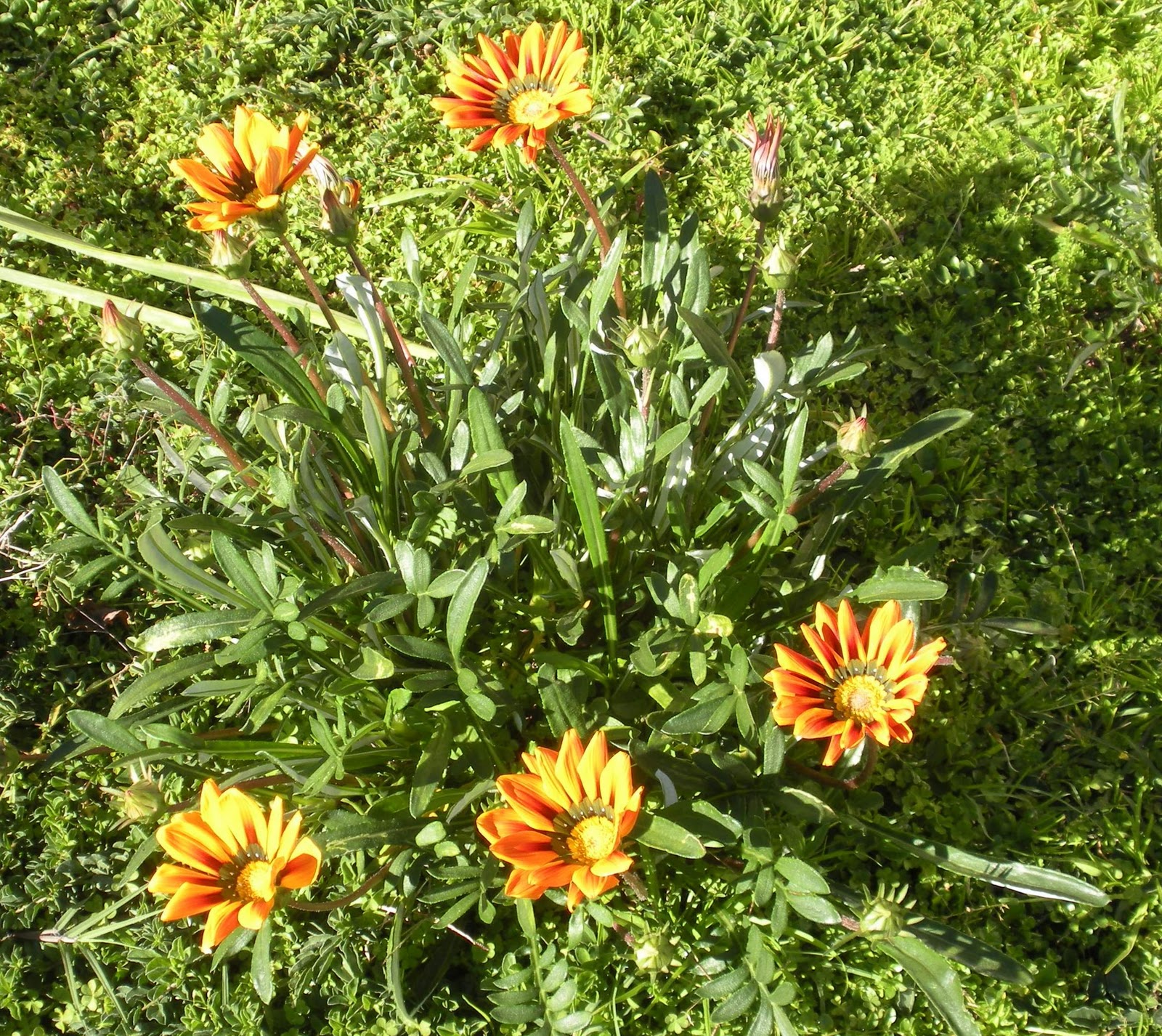
Some flowers are rare and beautiful. I have uploaded some photos of flowers for you to enjoy.


Melaleuca delicate flowers.


Red Kalanchoe and Black eyed Lilly


Black Eyed Lilly


Flowers of Turmeric


Daisy


Gazania


Lobelia (snowflake)


Melaleuca

Bacopa monnieri (Brahmi) flowers


Convolvulus sabatius


Unusual choko (seemebadanekayi, chokote) flower


Sunrise


Copyright: These photos are my photos. Please don't steal it and use it. If you have to then please be decent and use this blog as a reference. I always provide reference to materials I have used from other websites. However many sites use others photos, information including Indian historical information and put their watermark or name on it. This is wrong and it is stealing. I do not do such things.