Showing posts with label Gardening. Show all posts

Saturday, December 31, 2011

How to conduct sprays at home garden and in agricultural work

Use of spray chemicals properly

In countries like India where the farming sector employs over 52% or the population the focus is on production at any cost. This is because farmers have small land holding and want to maximize their production and government is focused on growing majority of the produce with in the country rather than spend foreign currency to import food. There is nothing wrong with these goals. However what is becoming more and more obvious through reports in new papers is that safety is being ignored. Ignoring safety is not just a individuals problem it is country's, society's and family's problem too.

For a country which ignores the safe use of chemicals it has to face problems like that caused by Endosulfan resulting in over 4000 victims of cancer just in the Kerala state alone. Let us just look at the cost of unsafe spraying practices. First of all let us assume about 1000 of these people were farmers and these people had land holding of 2 acres. Let us assume they produce rice of about 1tonne each in the 2 acres. That means 1000 tonnes of rice. Now let us assume the cost of this rice is about 25 rupees per kilo retail. Therefore cost of 1 tonne of rice is about rupees 25,000. Now the 1000 tonne of rice will be worth 25,000,000.

Next the country because of the damage caused to these individuals has paid compensation. Even if each of these people was paid only 100000 rupees or 1 lak, that would be 1000 laks. Added to these is the cost of treatment for each of these individuals in public hospitals.

Next let us look at the family. The kids may not get proper education or nutrition due to this lack of safety. The wife may have to work in the fields and may not able to look after the kids properly. This of course will impact on the immediate society.

Below is the image of brain cancer MRI taken from a agricultural worker in Kashmir where the researchers found over 30 different pesticides were used. Among them was endosulfan too.
Brain cancer and pesticide relationship in orchard farmers of Kashmir. Indian Journal of Occupational and Environmental Medicine, Year : 2010, Volume : 14, Issue : 3, Page : 78-86.


How to spray safely (head covered, hair covered, body legs hands fully covered and gloves worn)


How not to spray ( body exposed, hair, head and eyes exposed to the spray)

Body hair is one of the best absorbers of chemicals. Many of the insecticides are neurotoxins especially those which are used for agricultural purposed. Some of these chemicals used at home although at a lower toxicity levels care should be taken to read the labels to ensure right Personal Protective Equipment is worn.

Can one avoid using pesticides especially at home?

Yes there are many ways to reduce the insect damage in veggie patches. Use plants like Basil and marigold interspersed among the vegetables to reduce insect damage. The compounds emitted by marigold is a natural preventative of insect invasion. Basil attracts bees which once again prevent other insects from attacking your veggie patch.


Basil flowers with bees

Marigold Plant

One can use netting to prevent insects from attacking your vegetable plants or fruit trees. 


In addition to these one can use sprays such as Neem oil at the rate of 5mls to a liter once in 10 days to reduce insect damage. Neem oil has been used in countries like India and is a known insecticide. It is not harmful as neem leaf can be eaten (although bitter) and the oil can be applied on the skin. Unlike other insecticides it is not harmful although use of gloves, sunglasses, hat and a dust mask may be prudent.  Neem also kills juveniles and prevents further hatching from attacking repeatedly.

One homemade spray recipe to use is very simple.

5 broken cigarettes
5 dry chillies
1 spoon of oil
1 liter of water

Mix all of the above and leave it for about 2 weeks.

Use the mixture at 10mls to a liter and spray on plants. Ensure you wear gloves and glasses to prevent chili from entering the eye.


Disclaimer

People should undertake training to conduct sprays properly. Read labels and Material Safety Data sheets prior to conducting sprays. Labels are stuck to the spray bottles. Material Safety Data Sheets should be provided by the reseller as a hard copy or will be on the Internet.

As a precaution use personal protective equipment when spraying.
These kinds of things are highly preventable. I have used some images downloaded from the internet to illustrate how to use sparys either at home or in fields.

Sunday, September 25, 2011

Gardening- Does it have to cost a lot? Does it need large space?

These days every gardening show I watch is either recommending a product or advertising a product or doing a stealth advertising of a product. Therefore it wont surprise me if a novice gardener with a small backyard or a balcony will think that they need to have either a large space or lots of products or both and give up on gardening before they can even start.

It does not have to be that way. I will show you how to have a garden literally with anything you may have at home, some potting mix and some fertilizer. One does not need more than that. Plants have been growing for 400 million years and they did not use all the products that are advertised on TV. This also has an impact where the products you use for gardening will be recycled products and since you will only use simple basic ingredients you really don't have to spend too much. 


Oil bottle being cut with a hacksaw


Cut bottle with conical top to be used as a funnel
What can you use to make pots? Any plastic drink bottle such as washed coca cola plastic bottles or washed oil bottles or any plastic bottle of any kind. These are cut at the neck using a hack saw blade. Remove the neck part which is conical and you can use it as a funnel for various purposes. Look at the plastic bottle pots below used for growth of small trees.


Now use a drill or a iron needle which is about 4mm in diameter and make 2 holes at the bottom sides of the bottle leaving about 4cm from the base of the bottle to the hole on the bottom side. This will help to retain some water at the bottom without draining it all out. To prevent water from dripping on the balcony or some other surface cut off the bottom of another larger bottle at the bottom to use it as a saucer. Do not throw away the top 3/4 part which is is now bell shaped and can be used as a hot house for young seedlings.

Use some potting mix to fill the bottle after making holes on the bottom sides. Pack tightly so that there is a strong base for the roots to grow. Place the root ball of the plant into the bottle-pot and pack more potting mix. The result will be as below where I have planted an Australian native tree into a bottle pot. so long as they are well watered and kept well drained you can keep slow growing plants for several months or 2 years in that bottle pot before transferring it into bigger pots. 


You can use similar bottle pots to grow young seedlings by planting seeds into it and covering it with either funnel part of the bottle to keep them warm in the early growth stages.

Now what else can you use?

If you want to grow tropical plants especially those with bulbs or rhizomes such as turmeric or ginger then you can use polystyrene boxes which are thrown away regularly either in pharmacies or medical centers as they receive vaccines etc in them. These are highly useful as pots. Do the same as with the bottle to make holes on 2 bottom sides about 4 cm above the base of the side. For polystyrene boxes you can use a small stick or a pencil sharp end to make hole gently without breaking too many bits.


Polystyrene boxes used as pots 
Lemon grass growing in a polystyrene pot 

When growing plants in these kind of recycled pots one can use acrylic paints or ornaments to decorate the pots and make them look decorative too. However ensure that you do not either over water or under water these as over watering will lead to fungal diseases which affect the roots and leaves and cause plant death and under watering will dehydrate plants and cause plant death too.


It is up to your imagination what to grow. generally in small areas one can grow ornamentals of about 30 cm height or vegetables such as dwarf beans, chillies, corinder, basil, turmeric, ginger, lemon grass, potatoes, onion chives very nicely in polystyrene pots so long as they get about 6-8 hours of sun light it will grow well. You can use some fertilizer for first few weeks after that once every month. In the west you can get powder fertilizer and use it as per label instructions. You now have no excuse to grow vegetables which give beautiful flowers and add ornamental value to your balcony. 


Friday, February 11, 2011

Gardening - Simple joys one can enjoy

In the age of increase in cost of living, wars, revolutions and floods one forgets how joyful simple things can be. One joy of life is gardening is just looking at plants irrespective of heat or cold, sunshine or rain keep producing food and giving it free to mankind, insects which keep pollinating to make fruits and flowers which keep blooming.

Some flowers are rare and beautiful. I have uploaded some photos of flowers for you to enjoy.


Melaleuca delicate flowers.


Red Kalanchoe and Black eyed Lilly


Black Eyed Lilly


Flowers of Turmeric


Daisy


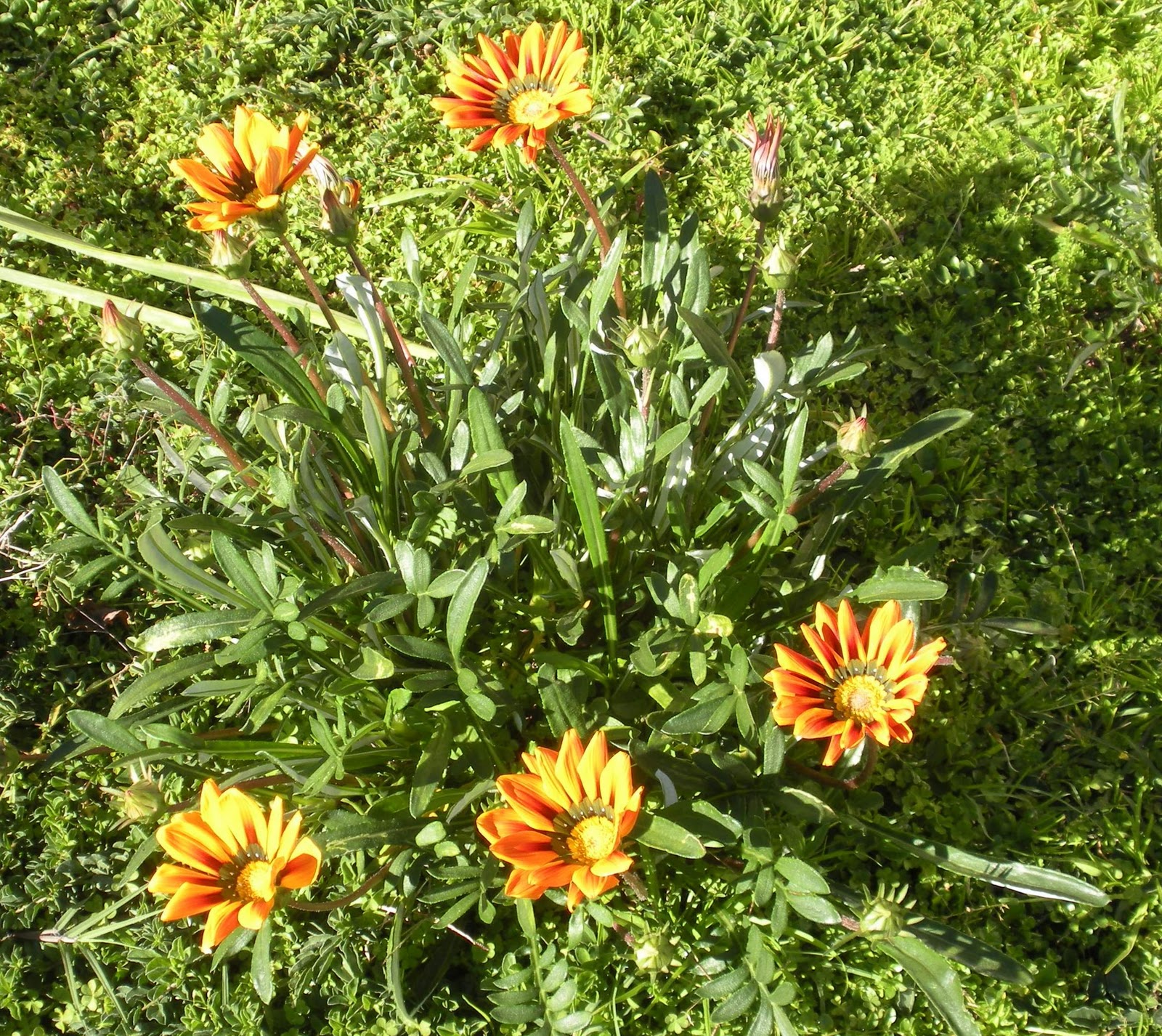
Gazania


Lobelia (snowflake)


Melaleuca

Bacopa monnieri (Brahmi) flowers


Convolvulus sabatius


Unusual choko (seemebadanekayi, chokote) flower


Sunrise


Copyright: These photos are my photos. Please don't steal it and use it. If you have to then please be decent and use this blog as a reference. I always provide reference to materials I have used from other websites. However many sites use others photos, information including Indian historical information and put their watermark or name on it. This is wrong and it is stealing. I do not do such things.